

Published on:
11-February-2024
Written by:
Mohana Prabhakar
Reading time
7 minutes
Share
Recruiters take 8 seconds to scan a resume.
In those 8 seconds, here’s what recruiters look for in a resume:
-
Your job titles & relevant qualifications
-
Your work experience
-
The highest level of responsibility you reached
-
Where and when you have developed your skills.
How can you structure your resume so that a recruiter gets all the information in 8 seconds and shortlists you?
In this blog, we’ll cover:
-
Types of resume
-
Creating a master copy
-
ATS-friendly resume structures
-
Components of a good resume
Types of Resume
Chronological Resume
A chronological resume is the traditional one listing your experience in inverse chronological order. It is the most versatile and easy-to-scan resume format. However, it highlights the career gaps and doesn’t work well for those switching careers. This format includes:
-
Contact information
-
Summary
-
Professional experience
-
Skills
-
Education
-
Volunteering experience, side projects, interests (optional)
Functional Resume
A functional resume is for those switching careers as it highlights the skills and relevant qualifications, diverting the attention from the work experience. This resume type is specifically for creatives and veterans looking for new roles. The format has the following components:
-
Contact Information
-
Objective
-
Summary of Skills
-
Additional Skills
-
Experience
-
Education
Combinational Resume
As the name suggests, this resume blends chronological and functional formats to showcase your work experience and skills. Your employment history and skills occupy most of the space, so projects, interests, and volunteering-related information must be eliminated. This resume format is for highly experienced professionals working in specialised fields.
Creating a master copy
The goal of your resume is to get you an interview, and to achieve that, you have to make it simple, easy to read, and relevant to the job you’re applying for. Before jumping to create a customised resume for a role, create a master copy.
A master copy is a brain dump of work-related details, from your experience to your interests. Creating a master copy will help you customise your resume to each position, focusing on the sections that best highlight your suitability for the role.
ATS-friendly resume structure
The term ATS stands for Applicant Tracking System, a cloud-based software employers use to automate the data collection from candidates, store them in one place, and filter potential candidates based on specific prerequisites.
The best ATS-friendly resume structure is a single-column, chronological resume submitted in Word or PDF format.

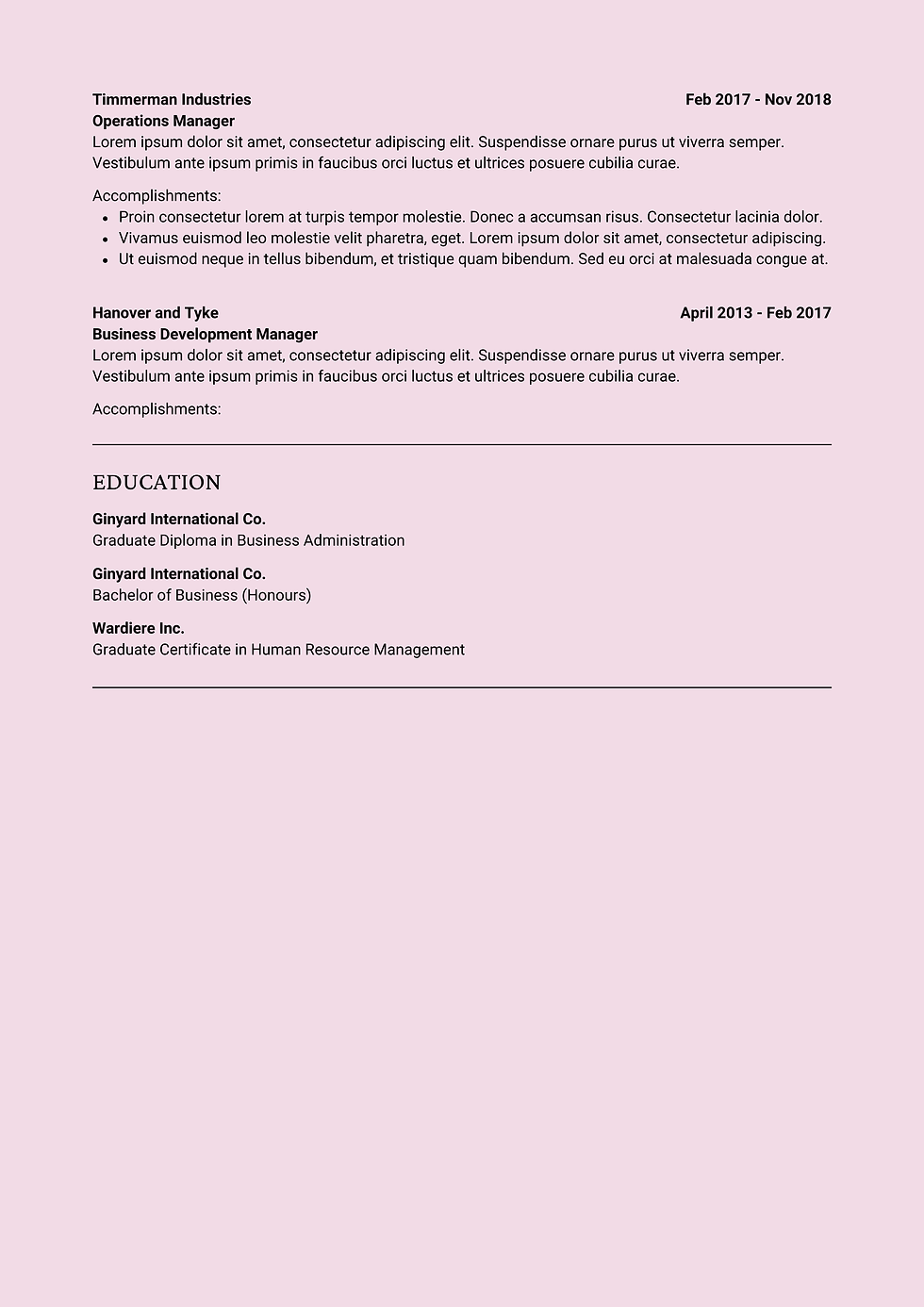
Using a two-column resume sometimes confuses the ATS, as it is hard to parse and gather data. Sometimes, the ATS only gathers details from column one, which provides incomplete information about you, even though you’re qualified for the role.

Avoid using graphics, images, and tables, as they also make it difficult for the ATS to scan your resume. Keep it simple in terms of design and language. The commonly used fonts are Arial, Times New Roman, Calibri, or Helvetica, and the font size is between 10.5 to 12 for regular text and 13-15 for headings. The accepted date format is MM/YYYY, and for margins, leave 1 inch on all sides of your resume. Use bullet points to list your responsibilities and ensure there is no error in the details of your resume, as it can lead to rejection.
Components of a good resume
To make your resume effective and well-rounded, you need to organise the gathered information in the following format:
-
Name & contact details.
-
Summary
-
Career highlights
-
Skills
-
Technical tools & languages (like node.js, python, etc.)
-
Work experience
-
Internships & volunteering
-
Education
-
Academic projects
-
Interests
Including these components in your resume can significantly enhance its effectiveness in showcasing your qualifications and making a solid impression on potential employers. Here's why each section is important:
Component 1: Name and Contact Details
This section includes your full name, contact details such as email address and phone number, LinkedIn profile, testimonials, and portfolio, if you have one.
These are essential information. Your name helps employers remember you, and your contact details allow them to contact you quickly. Ensure your email address is professional and your phone number is up-to-date. Also, it is not always necessary to add testimonials from previous employers or colleagues, but it can add credibility to your skills and achievements. A portfolio visually demonstrates your work and abilities, which is especially important in creative fields.
Component 2: Summary
A summary at the beginning can give employers a quick overview of your experience, skills, and what you bring to the table. It's a concise way to make a solid first impression. Note that your summary shouldn’t be more than 3-5 sentences.
Template:
<Adjective> <Job title> with <x> years of experience in <industries>. Skilled in <top 3-5 hard skills>. Proven track record in <soft skills>. You can also add - Certified in <qualifications & licenses> - if mentioned in the job description. For marketing professionals, add the target markets, personas, GTM models, product types etc., if it’s mentioned in the job description.
Example:
Highly motivated and detail-oriented data analyst with 8 years of experience in the healthcare and pharmaceutical industries. Skilled in extracting actionable insights from complex datasets using Python, R, SQL, and advanced Excel. Proven track record in leading cross-functional teams and completing projects on time & budget.
Component 3: Career Highlights
Highlights help you set the tone for the rest of your resume by drawing attention to your key accomplishments and strengths. Add 3-5 top achievements of your career, and if you’ve got more, choose the ones that resonate well with the role you’re applying for.
Template:
What did you do? How did you do it? The result & impact.
Example:
Led the development and launch of a new mobile app by forming a cross-functional team, analysing the market, and employing Agile methodologies, resulting in a 40% increase in user engagement, a 30% rise in monthly subscriptions, and heightened industry recognition.
Component 4: Skills
Listing your skills helps employers understand what you're capable of. Tailor this section to the job you're applying for, emphasising skills that are relevant to the position.
Component 5: Technical Tools & Languages
This section is especially important if you work in a technical field. It is an opportunity to showcase your proficiency in tools, software, and programming languages.
Component 6: Work Experience
Your work history provides a clear picture of your professional journey. Include details about your role, company name, whether it is a full-time or a contract role, duration, responsibilities, achievements, and the impact you made in each role.
To write your responsibilities, please follow the ABC method: Explain the responsibility, how you did it, and the result/achievement/impact.
Example:
Strategised and oversaw step-by-step IT infrastructure migration with IT teams, ensuring uninterrupted operations and implementing robust security measures. Elevated scalability, slashed maintenance costs by 30%, and fortified data security, fostering a more agile and resilient IT environment.
Component 7: Internships & Volunteering
Internships and volunteering can be a valuable experience, especially if you're a recent graduate or changing careers. They demonstrate your ability to apply your skills in a real-world setting.
Component 8: Education
This section is crucial, especially for recent graduates and career changers. It informs employers about your academic background and any relevant certifications.
Component 9: Academic Projects
Academic projects are particularly useful for entry-level candidates or those transitioning to a new field as they showcase your ability to apply theoretical knowledge to practical situations.
Component 10: Interests
Including a brief section about your interests can make you more relatable and memorable. It also provides potential conversation starters during interviews.
It's also worth considering why some sections might not be necessary:
Address: In many cases, your address is no longer required, especially if you're open to relocation or the job is remote. It's better to use that space for more relevant information.
Referees: While references are essential, you can provide them upon request. Including them directly on your resume can take up valuable space.
Photograph: Adding a photo to your resume can introduce bias, unprofessional appearance, privacy risks, and potential confusion for applicant tracking systems. It's best to prioritise relevant qualifications and skills concisely.
Author’s note
While these points can be informative, there is no concrete evidence on what works best. You’ve got to experiment with the ideas here and test them out to see what works for you. Good luck!